English
 中文简体
Birthday Table Setting Ideas: A Practical Guide for Planners and Buyers
Content
Thirty guests, one 8-foot table, and a cake that needs to be visible from the door. That is the real test of a birthday table setting. The best setups are not the ones with the most props; they are the ones where the color story, height, and paperware work together so guests can eat, mingle, and take a decent photo. For party planners and buyers sourcing for repeat events, the practical answer is to start with a two-color base, add one accent, and choose paper plates, napkins, and cups that can survive icing, ice cream, and a few hours of grazing. If you need a step-by-step sequence, this birthday table setup guide covers the order of work; the ideas below focus on the decisions that make the table look intentional.
Pick a Color Story Before You Pick a Theme
A theme gives you a vocabulary—woodland, retro diner, pastel unicorn—but a color story gives you a table that reads as one composition. Use a 60-30-10 split: 60% of the table in a quiet base (white, kraft, ivory), 30% in a supporting tone (sage, dusty blue, blush), and 10% in an accent (gold, black, bright coral). A table with three base colors and two accents usually reads as cluttered, not creative.
Paperware should do one job: carry the base or the accent, not both. If your plates are printed with a busy pattern, keep napkins solid and cups simple. If the napkins carry a floral or heart motif, choose plates in a solid color and let the napkin be the detail. This also simplifies sourcing. A buyer who locks two base colors and one accent can order plates, napkins, and cups across several events without rebuilding the inventory list each time.
Layer Height, Texture, and Shapes Without Cluttering the Table
Height is the difference between a flat spread and a table that feels styled. For a seated dinner, keep centerpieces at or below 12–14 inches so guests can see across the table. For a buffet or cake table, you can go higher, but use risers at two or three distinct levels rather than one tall stack. A cake stand, a low bowl of flowers, and a tray of cups at different heights create depth without blocking conversation.
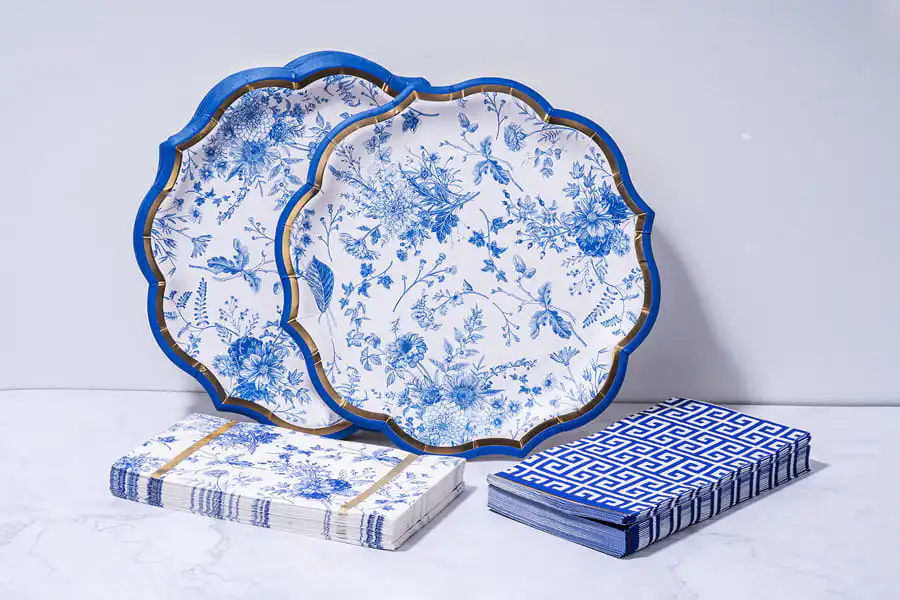
Shape is the second layer. Round plates are the default, but a flower-shaped or wavy plate adds movement without adding another color. Use the shaped plate as the main course plate and keep the napkin and cup in the same palette. One shaped element per place setting is usually enough; two or three compete for attention.
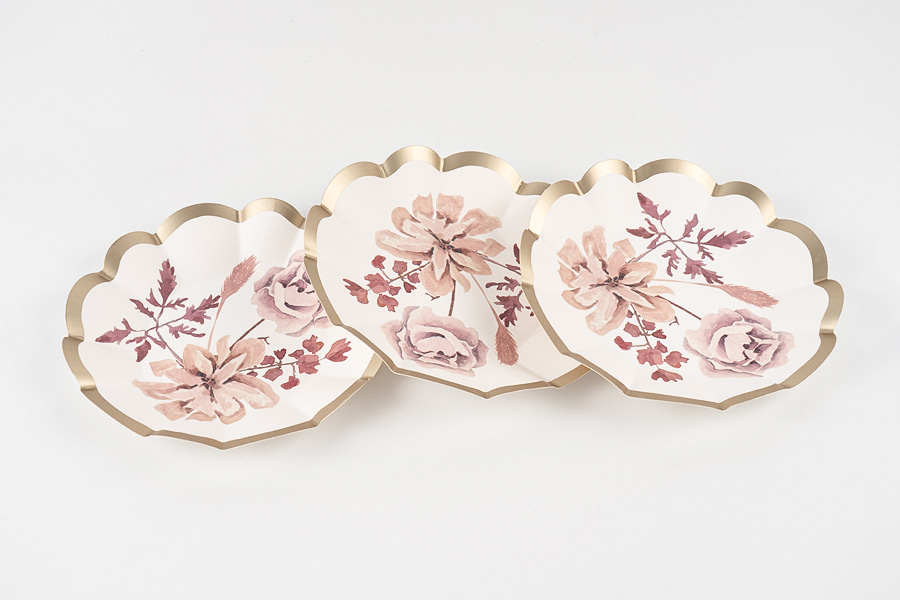 Flower-Shaped Disposable Paper Plates for Themed TablesThese petal-outlined plates add a shaped focal point to place settings while offering sturdy, oil-resistant disposable tableware in multiple sizes.View Product →
Texture can come from embossed napkins, gold-stamped cups, or a woven runner. If the paperware is smooth and printed, add texture through the table linen or a wooden board. If the paperware is embossed or hot-stamped, keep the linen plain so the detail is visible.
| Setting style | Paperware mix | Why it works |
|---|---|---|
| Casual family birthday | Standard round plates, floral napkins, single-wall cups | Low cost, easy to stack, and forgiving for mixed ages |
| Kids’ theme party | Flower or cartoon plates, themed napkins, double-wall cups | Bright shapes keep the table playful; double-wall cups handle spills and cocoa |
| Elegant adult dinner | Gold-stamped round plates, embossed napkins, gold-stamped cups | Metallic accents read as celebratory without extra props |
Choose Paperware That Handles Cake, Ice Cream, and Hot Drinks
A pretty plate that bends under a slice of cake is a false economy. For main courses and cake, look for plates in the 300–400 GSM range with a grease-resistant coating. That range gives enough rigidity to hold a generous slice plus a scoop of ice cream without leaving a mark on the tablecloth. For kids’ tables, a slightly smaller plate is easier to handle and reduces waste.
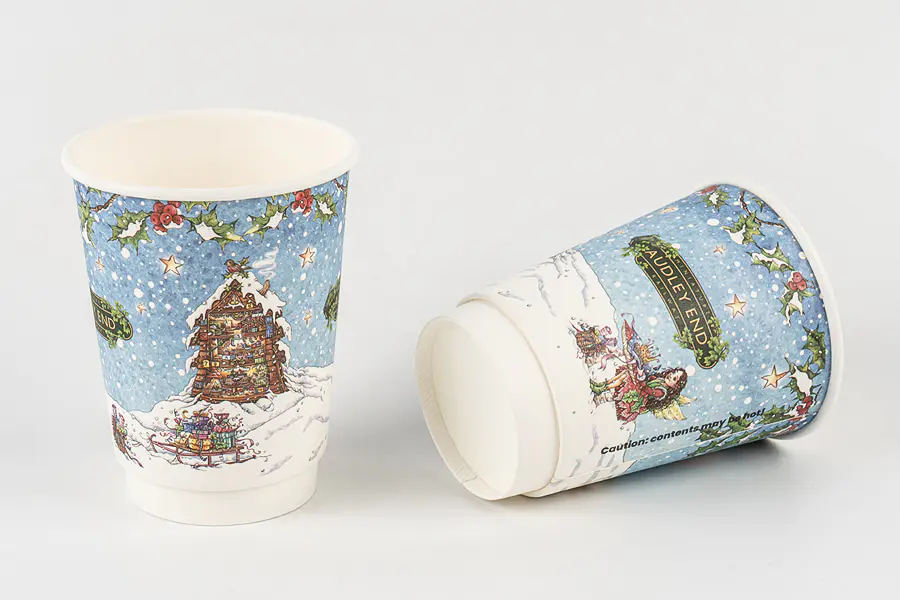
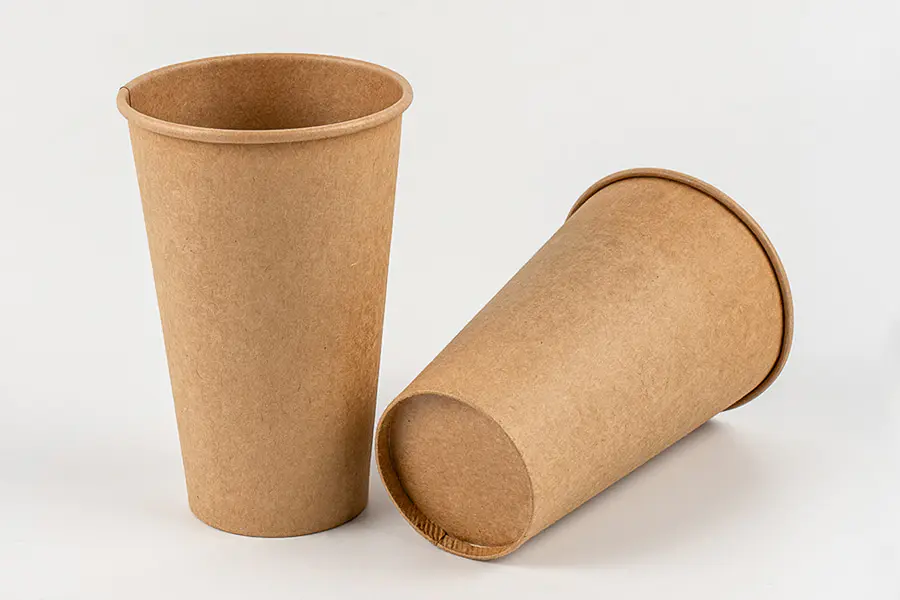
Cups need a different standard. If you are serving hot chocolate or tea, a double-wall cup protects fingers and reduces condensation on the table. For cold drinks and ice cream, a single-wall cup with a sturdy rim is usually enough. Napkins should be 2-ply or 3-ply for a birthday table; a thin napkin that tears on the first wipe undermines the whole setting. Match the paperware weight to the food, not to the photo.
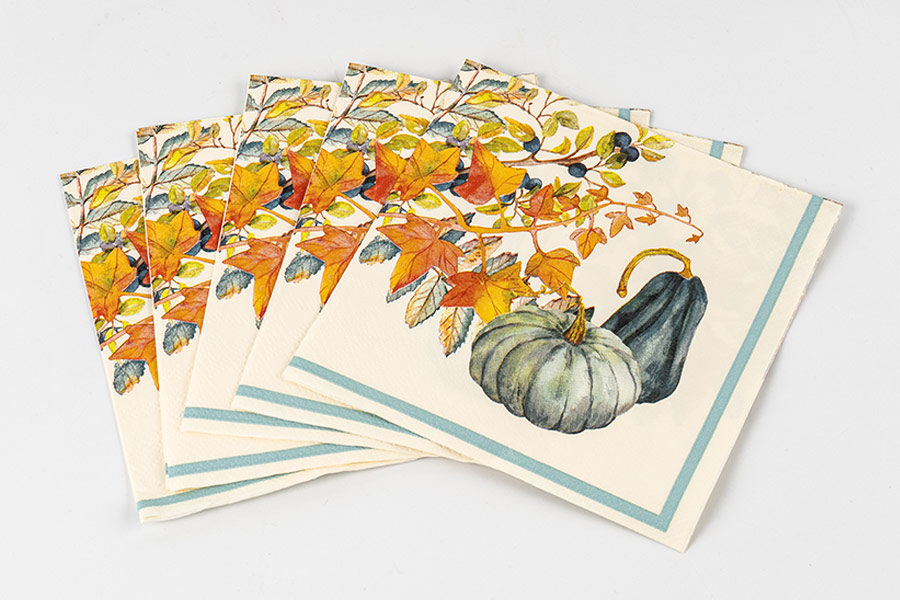 Floral Paper Napkins for Themed Table SettingsThese printed floral napkins bring a decorative accent to place settings and are available in absorbent 2-ply or 3-ply options.View Product →
Decorated napkins can carry the theme without extra centerpieces. A floral or heart motif folded in a simple triangle adds color at each place setting and keeps the table from looking empty between plates. If the napkin is the accent, keep the plate and cup in the base color.
Match the Table to the Guest List
A kids’ table set at adult height is a spill waiting to happen. Use a 24-inch table with a 12-inch centerpiece, and keep cups and plates within reach. Bright colors, character sets, and shaped plates work because children look at the table from a lower angle; details at eye level matter more than height. A child-height table with two colors and one character theme is more effective than a tall table with five props.
For adult birthdays, reduce the number of elements. A neutral runner, one metallic accent, and a clean plate stack often look more expensive than a busy theme. Mixed-age parties can be split into two zones: a lower kids’ zone with themed paperware and a higher adult zone with neutral plates and embossed napkins. The same color story can run through both zones so the room still reads as one event.
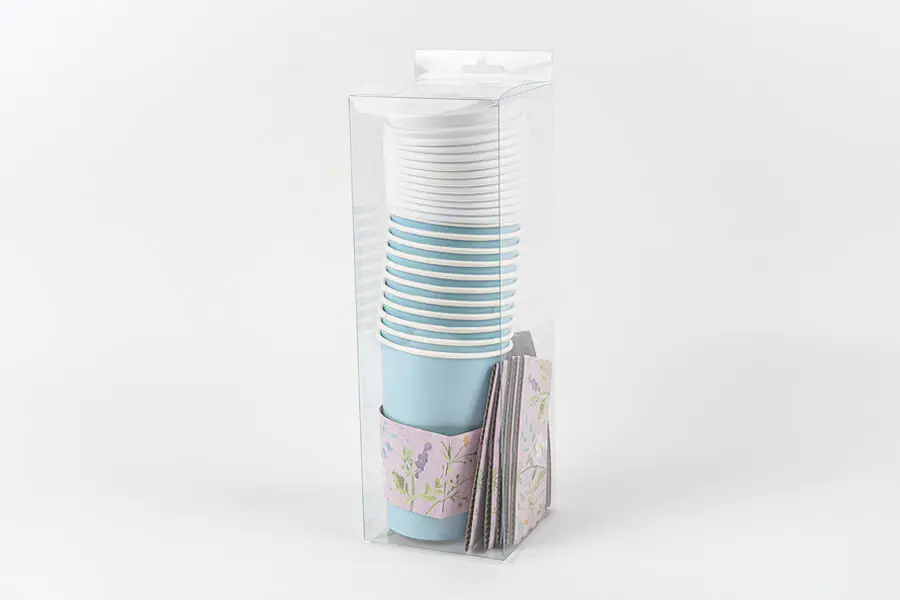
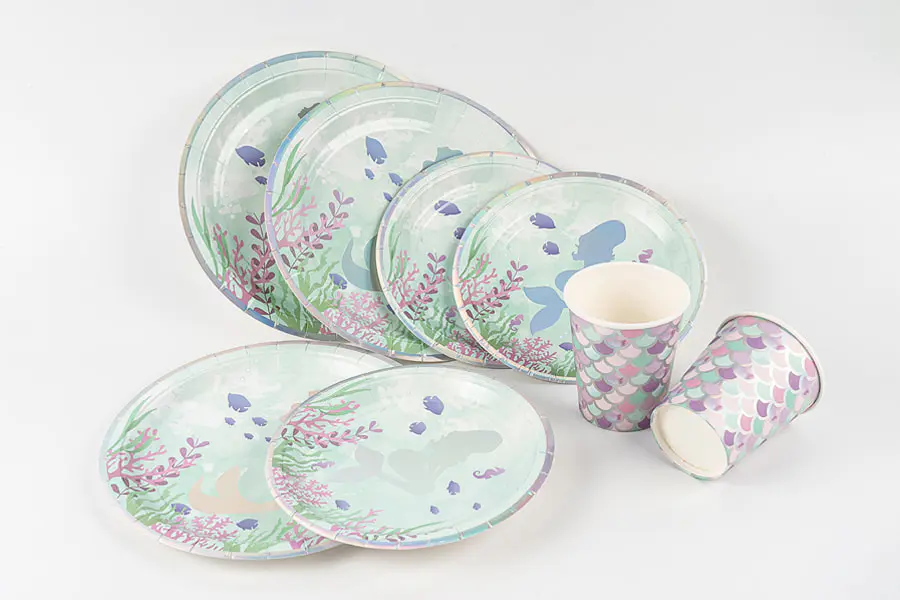 Childlike Fantasy Disposable Tableware Sets for PartiesReady-to-use cup, plate, and napkin sets in fantasy themes help stock separate kids’ party SKUs without washing or mixing adult tableware.View Product →
If you are sourcing for a venue or a party retailer, build the guest list into the order. Kids’ sets, adult sets, and neutral backups should be separate SKUs so staff can pull the right mix without opening every pack.
A Buyer’s Checklist for Birthday Tableware
Birthday tableware is a repeat purchase, so the sourcing decision matters more than the single event. Start with the certificate scope, not just the logo. FDA and EU food-contact compliance should cover the specific plate, cup, and napkin you are buying, and SGS test reports should match the production batch. Ask for the migration test results for grease and hot liquids if the table will serve cake and tea.
Capacity and lead time are the next filters. Yongfa Printware, for example, runs a 9,000-square-meter factory with more than 100 employees, and over 70% of the team has 10 or more years of experience. The production floor includes Heidelberg CMYK presses, die-cutting machines, and dozens of cup and plate forming machines, with a stated daily capacity of more than 1 million cups and plates. The company has held Alibaba Gold Supplier status since 2007, which gives buyers a verified trading history to check against the certificate scope. That kind of capacity matters when a retailer needs to restock three birthday themes before a weekend promotion. You can review the factory capabilities for equipment and process details.
Finally, check the customization path. If you need printed plates or napkins with a birthday theme, confirm the artwork file format, the minimum order quantity, and the proofing timeline. A supplier that already runs party themes can usually adapt an existing design faster than one that only prints plain stock. The best birthday tableware order is the one that arrives with the right mix, the right certification, and enough time to set the table without a last-minute substitution.
- Certificate scope matches the exact SKU and food-contact use.
- Plate GSM and coating are specified for cake, ice cream, and hot drinks.
- Napkin ply and embossing are confirmed against the table style.
- Custom print MOQ and proofing time are agreed before the event date.
- Packaging is labeled by theme so staff can pull the right set.