English
 中文简体
Eco Friendly Party Supplies: How to Choose Sustainable Plates, Cups & Napkins
Content
Ordering eco friendly party supplies for a seasonal campaign is rarely as simple as applying a "green" filter. A few years ago, a buyer could pick a bamboo plate and stop thinking. Today, the decision involves fiber source, coating chemistry, food-contact certification, and whether the factory can hold tolerances across a 50,000-piece run. The conclusion that holds up in practice is straightforward: the most dependable way to balance cost, performance, and environmental responsibility is well-made paper tableware, provided you verify three things before ordering—what it is made of, how it is certified, and who runs the production line.
What Makes a Paper Product "Eco Friendly"
Not every paper plate deserves the eco-friendly label, and it pays to know why. The environmental profile of a paper cup or plate is determined before it reaches the forming machine, in two decisions: fiber source and coating.
Fiber Source
Recycled pulp and FSC-certified virgin pulp are the two realistic options for responsible sourcing. Recycled fiber reduces pressure on forests but has shorter fiber length, which lowers stiffness in deep plates and hot cups. FSC-certified virgin pulp gives stronger structural performance and full traceability, at a slightly higher base price. Neither is automatically better: a cocktail napkin performs well with a high recycled content, while a double-wall cup intended for hot drinks needs fiber with more strength. State the end use before choosing the fiber.
Coating
The coating is where misleading claims appear most often. Traditional polyethylene (PE) makes the paper waterproof but blocks repulping and commercial composting. Water-based acrylic coatings provide oil and water resistance without a plastic film, and they let the paper move through standard recycling streams in most regions. PLA, a plant-based plastic, is compostable in commercial facilities but should not be mixed with paper recycling. The question "is this cup eco friendly?" is only answerable when you know which coating is used.
The comparison below captures the material choices commonly found in eco friendly party supplies:
| Material combination | Compostable | Recyclable | Typical use | Main risk |
|---|---|---|---|---|
| Recycled paper, uncoated | Yes, home | Yes | Napkins, light snack plates | Softens under wet food |
| FSC-certified paper, water-based coating | Yes, commercial | Yes | Cold cups, dessert plates, trays | Verify coating evenness |
| Paper with PLA lining | Commercial only | No | Hot cups, soup bowls | Needs separate collection |
| Paper with PE lining | No | No | Conventional tableware | Hard to market as green |
| Reusable plastic or metal | After long service | Yes | Event serveware, cutlery | Higher upfront investment |
For most bulk buyers in hospitality and retail, FSC-certified paper with a water-based coating is currently the most defensible all-round choice. It works across a wide temperature range, survives the recycling stream, and is easier to explain to end customers than a PLA-lined option.
Cups, Plates, and Napkins: Where Quality Shows Up
Once the material is decided, quality differences show up in function. Below are the three core categories and the specific defects to check on any sample.
Paper Cups
A paper cup has one job: hold liquid without leaking or collapsing. In production this comes down to side seam integrity, base-roll formation, and paper stiffness. Double-wall cups add insulating value and noticeably better rigidity, which is why they dominate hot-drink service. When evaluating samples, fill a cup with water at 85°C, wait ten minutes, then check for soft spots around the base and distortion at the rim.
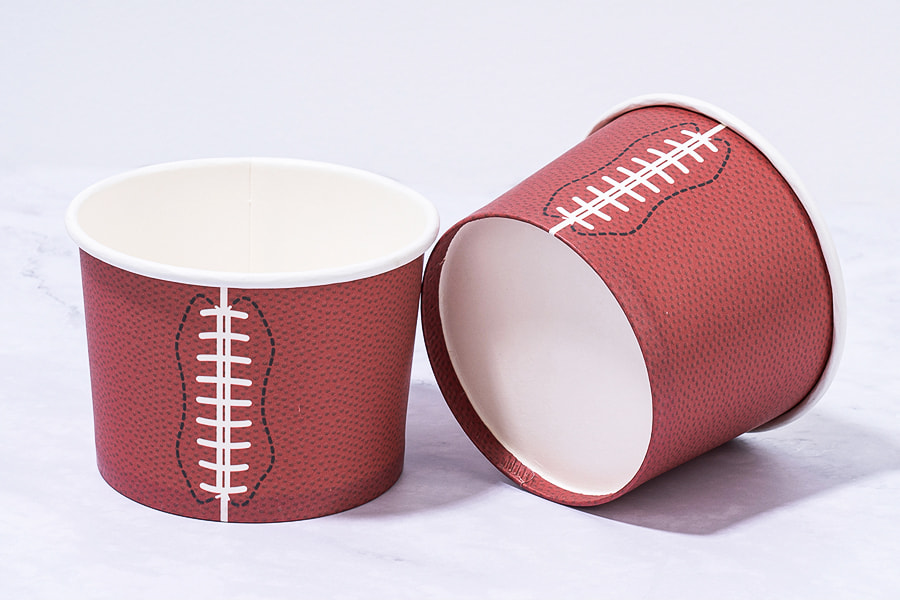 Custom-Printed Paper Ice Cream CupsFor frozen desserts, these customizable paper cups offer leak-resistant PE or PLA linings, full-color printing, and stackable sizes for dessert shops, events, and parties.View Product →
Custom printed cold cups are a separate consideration. Decorated ice-cream cups are popular in dessert shops, festival stands, and children's party venues, because the cup itself carries part of the table's visual theme. The same printing technology also works for branded cold drink cups at events.
Paper Plates
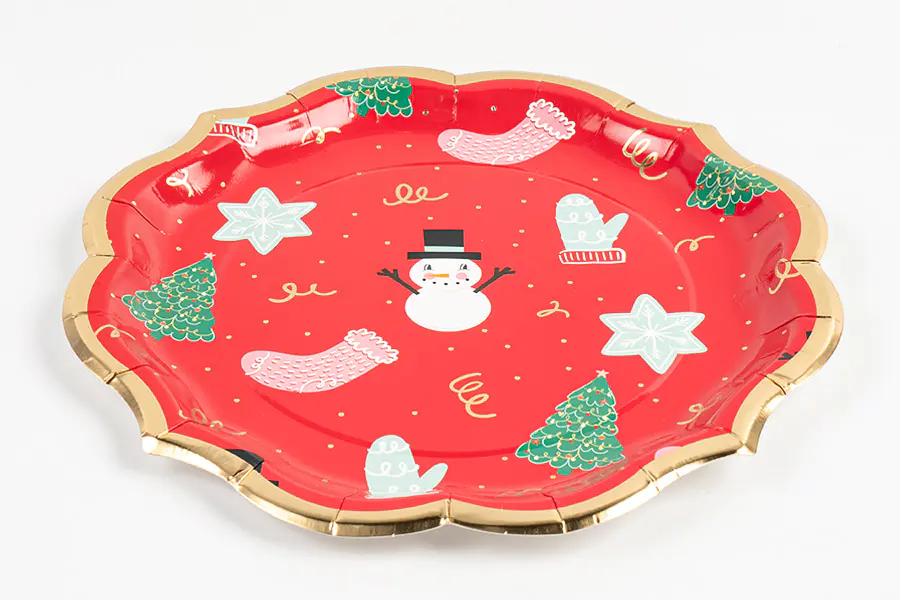
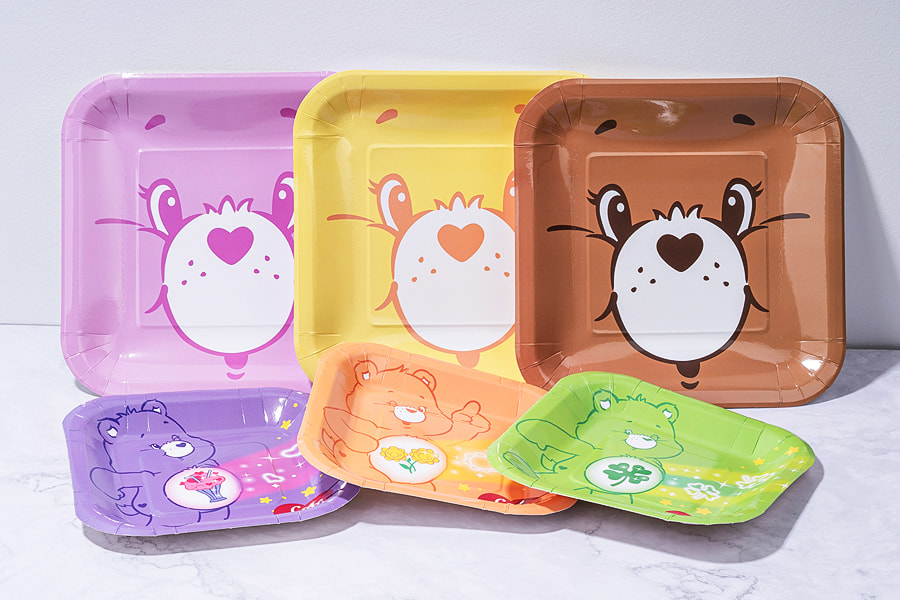
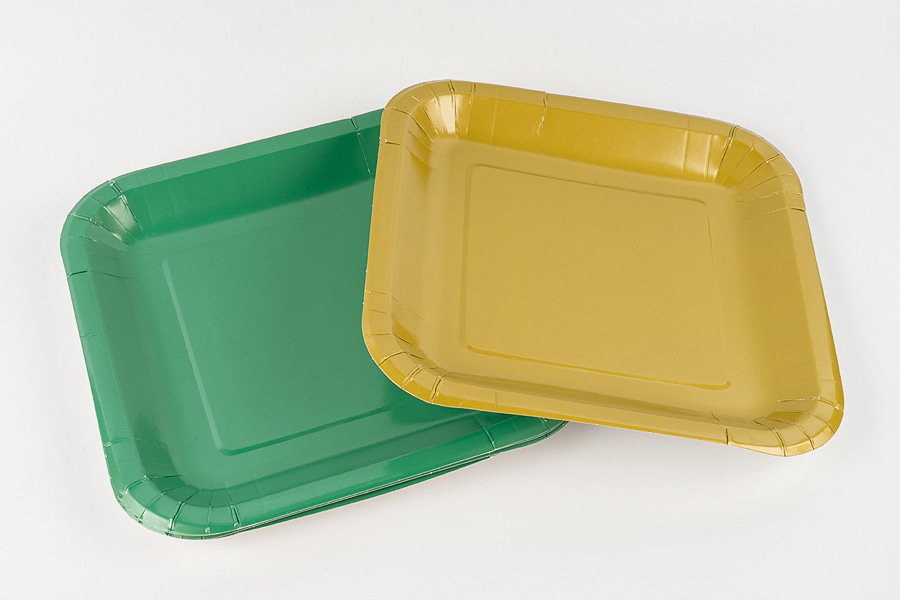
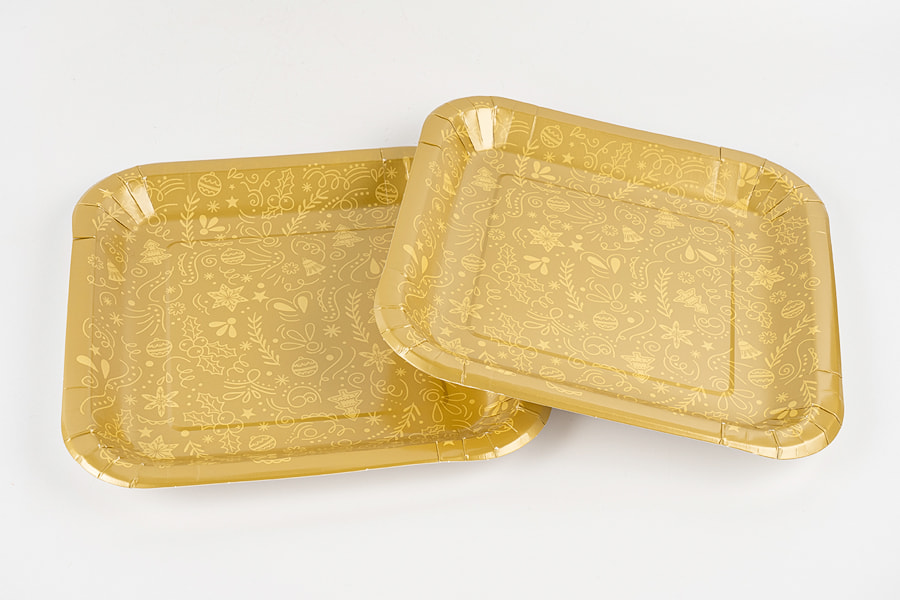
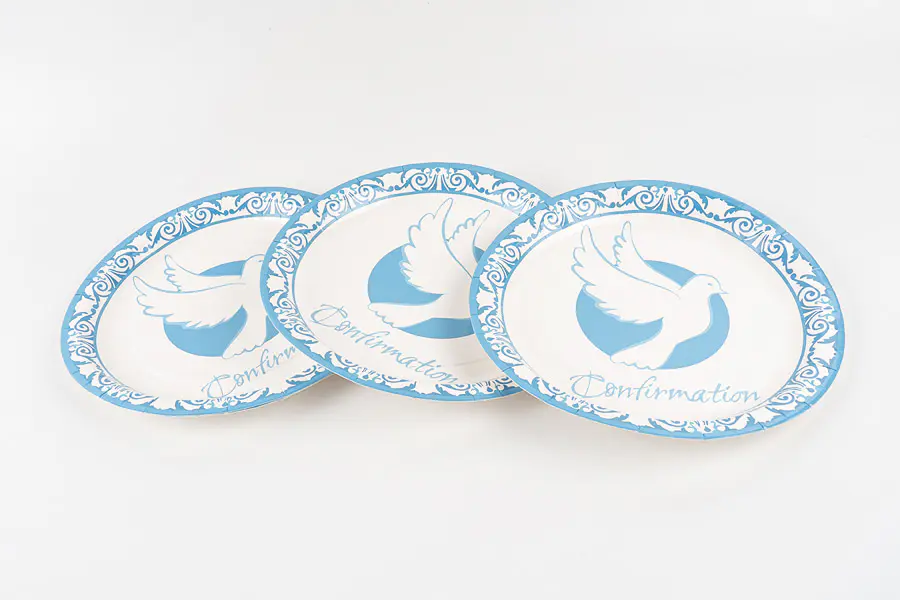
Plates are judged by rigidity and soak-through resistance. The most common failure is not a plate snapping in half; it is the center softening under wet or oily food. Press on the center of a sample with two fingers: if the surface flexes noticeably, it will not hold a serving portion. Formed edges help. Square and wave-shaped plates are not only decorative; the profiles created by die-cutting give them a better stiffness-to-weight ratio than a flat round plate.
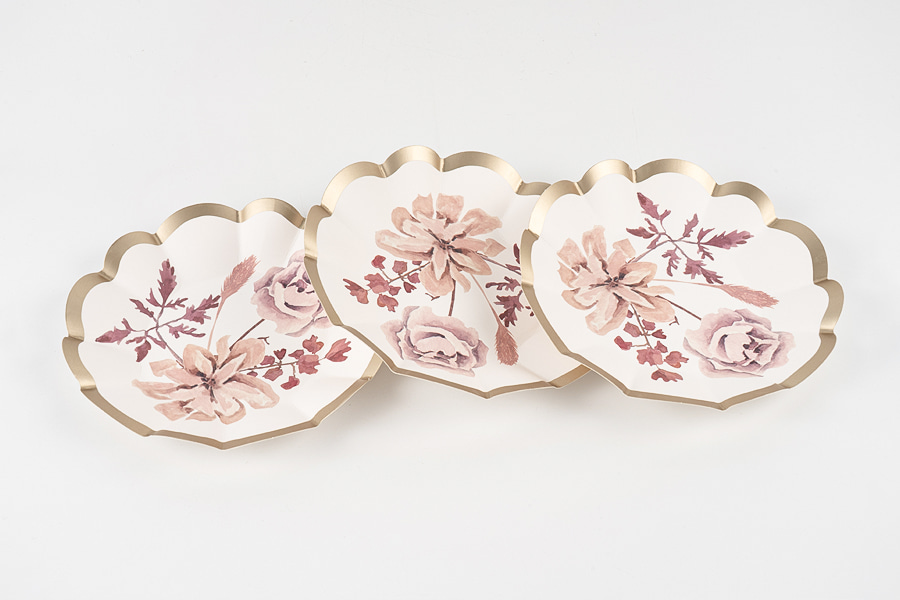 Flower-Shaped Paper Plates for Dessert TablesThe floral profile adds visual interest while high-grammage paper and oil/water resistance support desserts, brunch, and themed event service.View Product →
Flower-shaped plates, for example, add structural strength while also doing decorative work on a dessert or brunch table. If shape distinction is important without upgrading to a heavier paper, this kind of profile is the practical route.
Paper Napkins
Napkins are the easiest category to make more sustainable without affecting perceived quality. Embossed napkins use less fiber because embossing creates softness and bulk without adding material, and the textured surface improves absorption. They also hold their shape better in napkin dispensers and buffet stands. If a napkin will sit on the table as part of the décor, choose an embossed or hot-stamped option rather than a thicker virgin-fiber flat napkin.
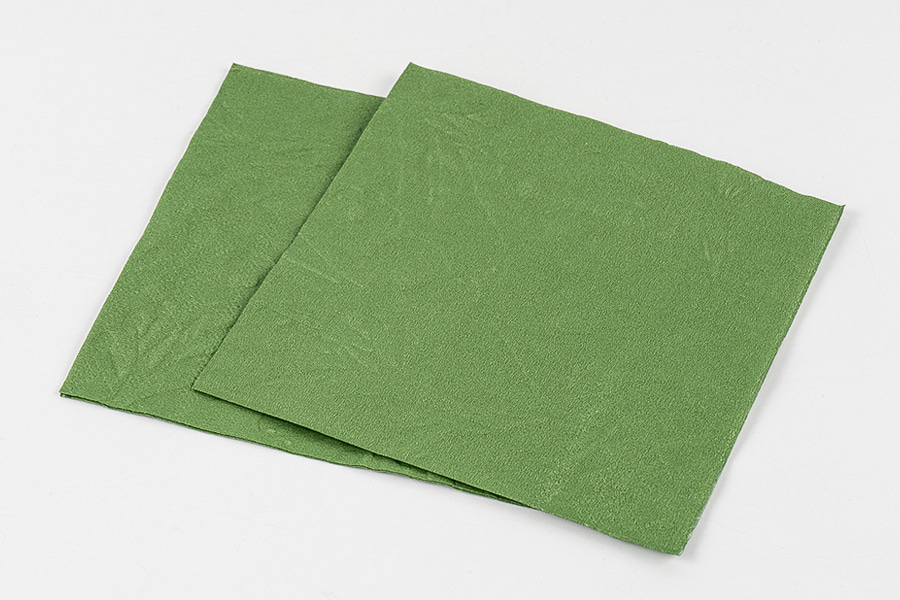 Embossed and Hot-Stamped Paper NapkinsThese textured napkins use embossing and optional metallic hot stamping to add tactile depth while retaining absorbency, suited to banquets, gifts, and branded dining service.View Product →
Matching the Product to the Occasion
Eco friendly party supplies are bought for a specific event, not as an abstract category. The right configuration depends on who will use the tableware and what will be served. The table below summarizes the five configurations that come up most often in restaurant, retail, and event buying:
| Occasion | Recommended format | Key priority |
|---|---|---|
| Holiday catering | Matching cups, plates, and napkins in one set | Visual coherence, quick setup |
| Children's party | Smaller plates, colorful prints, lighter weight | Low cost, fun design |
| Ice cream and cold drinks | Patterned or solid-color cups | Condensation resistance, branding |
| Everyday restaurant | Standard cups, solid plates, embossed napkins | Stacking, stable replacement supply |
| Buffet and assembly events | Flat-fold napkins, nested cups | Storage space, fast table setting |
Aligning the order with the occasion prevents overpackaging. A cocktail hour does not need heavyweight plates, and a casual buffet does not need insulated cups.
Customization and Branding Considerations
Most bulk buyers are not only purchasing tableware; they are buying a branded object that will be seen, handled, and photographed. Custom printing on cups, plates, and napkins is standard in this industry, but four constraints matter before committing artwork:
- CMYK printing covers most custom patterns; Pantone spot colors can be matched for brand consistency, but they require minimum quantities and slightly longer lead times.
- Custom shapes such as flower, wave, and holiday outlines rely on die-cutting. The design requires a die investment and a sampling round before mass production.
- Cup dimensions are linked to forming machine tooling. Rim diameter, capacity, and stack height cannot be chosen arbitrarily; ask the factory for available size ranges before finalizing artwork.
- Sample confirmation takes a few days plus shipping. Budget for at least one round of physical proofing before the full production slot.
None of these constraints conflict with sustainability. In fact, they reinforce it: a cup printed with a clear brand message is more likely to be used correctly by consumers, and a supplier that coordinates printing, die-cutting, and forming in-house has fewer transportation steps and less waste.
Supplier Verification Before You Order
Material specifications are meaningless if the factory cannot reproduce them across fifty thousand pieces. A well-designed product catalog tells you nothing about process control. These are the checks to run before shortlisting a supplier:
- Food-contact certifications: FDA, SGS, and EU standards. Check that the certification applies to the finished product, not just the raw paper.
- In-house printing, die-cutting, and forming: when all three are under one roof, quality and lead times are easier to control.
- Production capacity: a factory with only a few forming machines cannot serve a seasonal spike in demand or a large customized order.
- Inspection points: ask how thickness, stiffness, and seal integrity are measured, and how often these measurements happen.
One practical signal is whether the factory publishes a sustainability policy and treats environmental claims as a documented commitment rather than a marketing phrase. Another is whether you can schedule a factory audit. A supplier that opens its facility for inspection and explains its process is far less likely to overstate the eco friendliness of its products.
Eco friendly party supplies are not a shelf category; they are a set of specifications. Buyers who get the purchase right treat it as a combination of material, certification, and factory capability. Define the serving condition first—hot liquid, wet food, decorative table, or quick service. Then select the material, the format, and the supplier. That sequence produces tableware that reflects well on the brand and, more importantly, performs at the table.